
You can’t skip the pain of a breakup. Nobody can, no matter what the internet promises. What you can do is stop the things that quietly make it last longer, and start the few things that genuinely help your brain and your life move forward. That’s the real answer to how to get over a breakup fast: less about one big decision, more about a series of small swaps you make every day.
Below, those swaps are laid out in pairs, the habit to stop and the one to start in its place. You don’t have to do them all at once. Pick the ones that hit closest to home and begin there.
How to get over a breakup when your brain treats it like withdrawal
If you keep reaching for your phone, rereading old messages or checking whether they watched your story, it’s not a lack of self-respect. Anthropologist Helen Fisher and her colleagues scanned the brains of people recently rejected by someone they still loved. When they looked at photos of that person, brain regions tied to reward and craving lit up, the same systems involved in addiction. Psychologist Ethan Kross later found that thinking about a recent rejection also activates areas linked to physical pain.
So when people say heartbreak “physically hurts”, they’re not exaggerating. Your brain got used to this person as a source of comfort and reward, and the supply has stopped. Every little hit of contact, even a glance at their profile, briefly feeds the craving and resets the clock. That’s why most of what follows is about cutting those hits, then filling the space they leave.
The encouraging part is that cravings fade. The longer you go without feeding them, the less often they show up and the weaker they feel. The first stretch of real distance is usually the hardest, and knowing the pull is temporary makes it easier to ride out.
Stop checking on them. Start protecting your attention.
The most common thing that slows healing is the quiet monitoring: their stories, their playlists, who liked their latest photo. Each check feels harmless and gives a second of relief, followed by a longer stretch of hurt.
What helps is making checking harder rather than relying on willpower. Mute or unfollow them, archive your chat so it doesn’t sit at the top of your messages and move photos into a hidden album. If even that feels too close, ask a friend to change your password on one app for a few weeks. You’re not pretending the relationship didn’t happen. You’re just taking it out of your line of sight while your brain recalibrates.
Whether to mute or block is a real question, and the answer depends less on pride than on what each check does to you. Muting is usually enough when the breakup was fairly mutual, when you share friends or a workplace and a block would be noticed and talked about, or when you can go a day without looking. It keeps the door technically open while removing the constant drip of updates. Blocking makes more sense when you catch yourself searching for their profile by name even after muting, when they keep reaching out after you’ve asked for space, or when you’re using a second account to see what they post. It’s also the obvious choice if the relationship was controlling or frightening in any way. In that case, blocking isn’t a statement. It’s basic safety.
Some people worry that blocking looks petty. It might, briefly. But it’s rarely forever, and if you’re unsure, block for a fixed period, say a couple of months, then decide again with a calmer head. What tends to backfire is the half measure of unfollowing and then checking anyway through a friend’s phone or a search bar, which keeps all the craving and adds a layer of secrecy.
Instead of texting “just to check in”, write it down
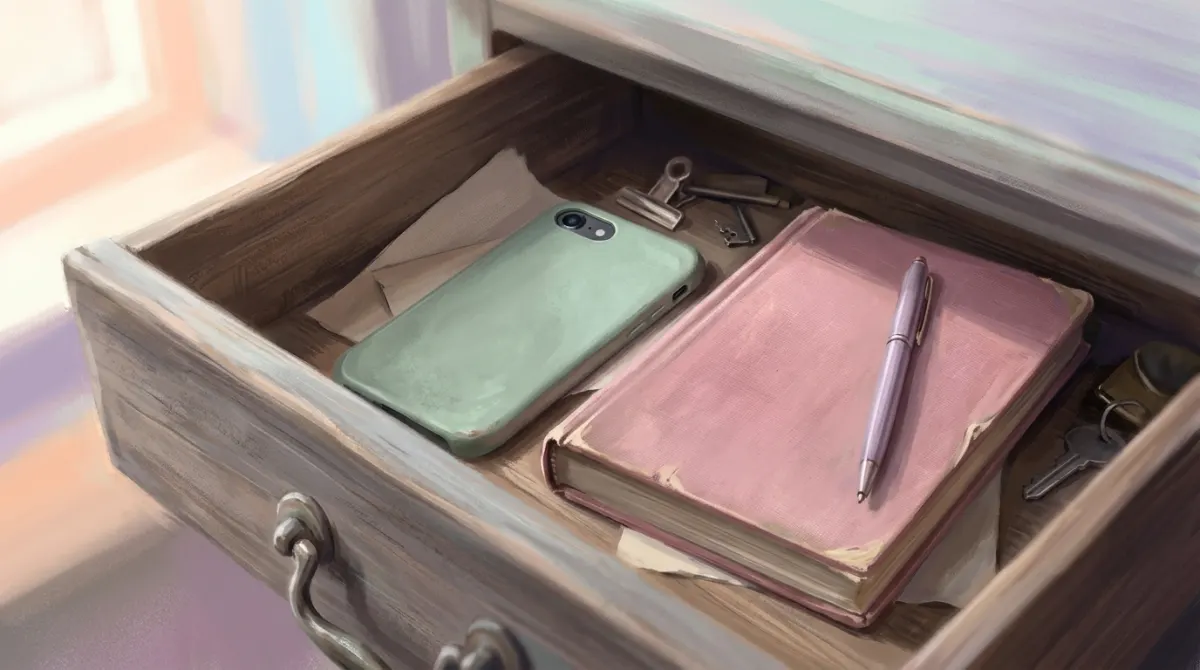
Late at night, the urge to send one message can be overwhelming. “I just want to know how you are.” “I saw something that reminded me of you.” It almost always reopens the wound, for both of you, and the reply (or the silence) rarely gives you what you were hoping for.
Try this instead: write the message in your notes app, in full, without filtering. Then wait until morning. Most people find that the urge has passed and that writing it out released some of the pressure anyway. If you share kids, a lease or a workplace, keep contact short and practical, about logistics only. Long conversations about what went wrong can wait, possibly forever.
Stop keeping the shrine. Start a memory box.
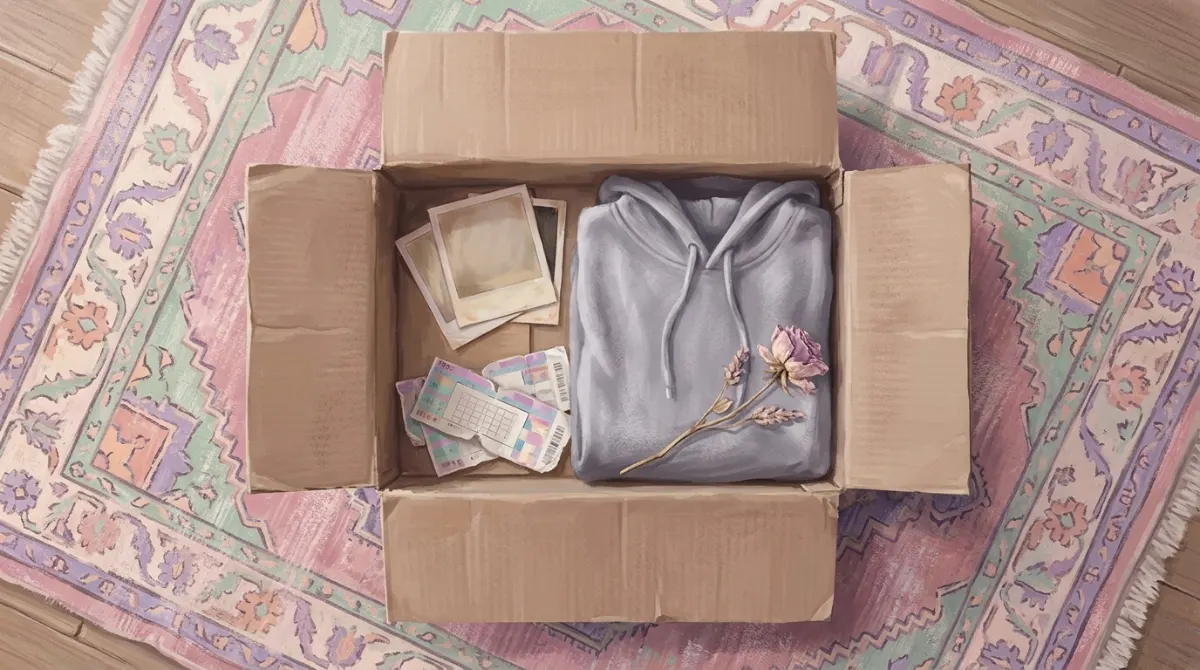
Their hoodie on your chair, the framed photo on the shelf, the mug they always used. Living surrounded by reminders keeps you in the relationship emotionally. At the same time, throwing everything away in a burst of anger is something many people regret later.
The middle ground is a box. Put the physical reminders inside, close it and store it somewhere out of the way, like the back of a closet or a friend’s place. You can decide what to keep months from now, when you can look at those things without your chest tightening.
Real life is messier than a box, though. If you shared a pet, the dog or cat isn’t a souvenir, and whoever keeps them should be the person who can actually care for them day to day, not the one who wants to “win”. Shared custody of a pet sounds generous but often means a weekly handover, a weekly conversation and a weekly reopening of the wound. If you can live without that contact, a clean arrangement is usually kinder to everyone, including the animal.
If you still live together until the lease ends, a box won’t solve much, but small changes do. Agree on separate schedules for the kitchen or the living room, sleep in different rooms if that’s possible, and keep your talks to bills and moving dates. Rearranging your own corner, even just new sheets or moving the desk, can help the space feel less like “ours”. And for things with real money or meaning attached, like a ring, a shared car, a pricey gift or a family heirloom, don’t decide in the first raw week. Write down what exists and who paid for what, then settle it once you’re calm. Heirlooms generally belong back with the family they came from. Everything else can wait in that box until it stops feeling like evidence.
Hear how other people did it
Advice only goes so far. Sometimes what you need is to hear from someone who has been exactly where you are. On Feels Club, every question starts with a real-life prompt, like “How did you get over…?”, and people answer with what they actually lived and felt. You can ask anonymously and read how others made it through.
Trade the highlight reel for the whole story
When we miss someone, memory plays a trick: it keeps the best moments in high definition and quietly drops the rest. You remember the road trip and forget the weeks you felt ignored.
Sit down one evening and write the full version of the relationship, the good parts and the hard ones. The arguments that kept repeating, the needs that weren’t met, the moments you felt alone even when you were together. You don’t need to turn your ex into a villain to stop idealizing something that, for whatever reason, didn’t work. Keep the page somewhere you can find it on the nights when nostalgia hits hardest.
Settle for a simple explanation, not a perfect one
Many people get stuck replaying conversations, searching for the exact moment it went wrong or the one thing they could have said differently. Sometimes there is a clear answer. Often there isn’t, or the answer you get doesn’t feel like enough. The search keeps your mind tied to the relationship long after it ended.
It can help to write the simplest true sentence you can about why it ended. “We wanted different things.” “They weren’t ready for what I needed.” “It stopped working and neither of us could fix it.” When your mind starts bargaining late at night, go back to that sentence. It won’t answer every question, but it gives you somewhere solid to stand while the rest settles.
Stop getting updates through friends. Start setting gentle boundaries.
Mutual friends can be a lifeline after a breakup, and also an accidental source of news you didn’t ask for. Hearing who your ex was with on Saturday, or that they “seem fine”, can undo a week of progress in one sentence.
You’re allowed to ask for what you need. Something like “I’d rather not hear about them for a while, unless I ask” is a reasonable request, and most good friends will respect it. You can also skip a gathering you know they’ll attend, or mute a group chat for a few weeks. None of this has to be permanent.
Stop isolating. Start filling your danger zones.
Most people have specific moments when a breakup hurts more, often a Sunday afternoon or the night you used to spend together. Left empty, those hours become the times you cry, scroll or text.
Plan something for those slots before they arrive. A call with a friend, a gym class, a dinner with your sibling, a show you’re watching with someone else. It doesn’t need to be exciting. It just needs to be there. And when you see friends, let yourself vent, but try not to make every conversation an analysis of your ex. A simple rule helps: talk about it for a while, then change the subject.

Less numbing out, more of the boring basics
Alcohol, endless scrolling and overworking all have something in common. They pause the pain without processing it, and it comes back the next day with less energy to face it. Jumping straight into a rebound can work the same way, feeling great for a couple of weeks before the feelings you skipped return.
The unglamorous alternatives work better than they sound. Go to bed at roughly the same time. Eat at least one proper meal a day. Get outside in daylight, even for twenty minutes. Move your body in whatever way you like. None of this fixes a broken heart, but heartbreak hits much harder when you’re exhausted.
Their timeline isn’t yours, so track your own progress
If your ex looks fine online, or is already seeing someone, it’s tempting to conclude that you meant less to them or that you’re doing something wrong. Neither is necessarily true. People process endings very differently, and some move fast precisely to avoid feeling the loss. Their timeline doesn’t measure yours.
There’s no official number for how long it takes to get over a breakup, and anyone promising “thirty days” is guessing. A more useful sign is what happens inside you. One day you think about them without your stomach dropping. You stop narrating your day to them in your head. You catch yourself excited about something that has nothing to do with them. Those moments usually arrive before you feel completely over it, and they’re worth noticing.
Stop waiting to feel ready. Start one new thing.
There’s a common belief that you have to feel better before you can start enjoying life again. In practice it usually works the other way around. Motivation tends to follow action, not precede it.
Choose one small new thing that has nothing to do with your ex: a class you’ve been curious about, a weekend trip with a friend, a recipe you’ve never tried, a new running route. It won’t feel thrilling at first, and it doesn’t need to. What matters is that you’re building memories and routines that belong only to you. Over time, those become the parts of your life you look forward to, and the relationship slowly moves from the center of your story to one chapter in it.
If you were the one who ended it
Not everyone reading this was left. Ending a relationship can hurt too, sometimes in ways people around you don’t expect. You might feel guilty for causing pain to someone you care about, or confused about why you’re sad when you made the choice. Being the one who leaves doesn’t cancel out the loss. Distance helps you as much as it helps them, and so does remembering the reasons you decided, ideally the ones you wrote down at the time.

When it’s more than heartbreak
Feeling sad, tired and unmotivated for a while after a breakup is normal. But if weeks go by and you can’t sleep, eat, study or work, if you feel hopeless, or if the relationship involved control, threats or violence, please talk to a doctor, counselor or therapist. In the US you can call or text 988, the Suicide & Crisis Lifeline, any time, free and confidential. The National Domestic Violence Hotline is available at 1-800-799-7233, or by texting START to 88788. In an emergency, call 911. A community like Feels Club can help you feel less alone, but it isn’t a replacement for professional support.
You don’t have to figure all of this out on your own. Somewhere out there, someone lived a breakup a lot like yours and found their way through.
Ask the people who have been there
Start your question with “What helped you get back up after…?”, share a few lines about what happened and read real answers from the community. You can also browse questions tagged breakups to see what others are going through right now.
Leave a comment